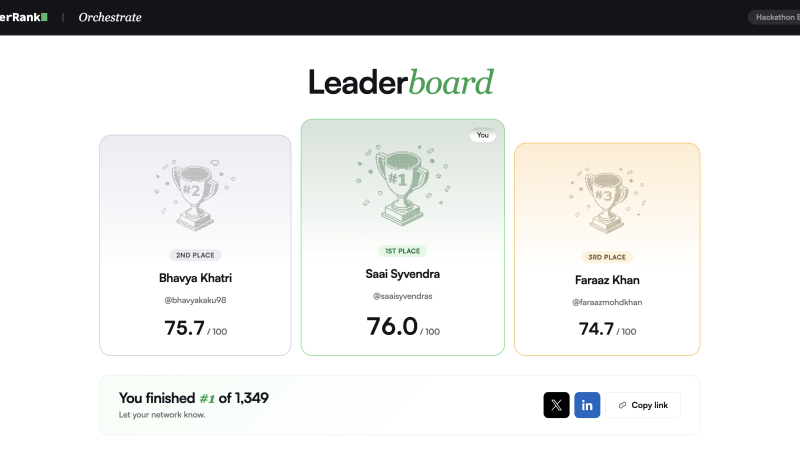
From a Fallen Tower to Best Pitch: 40 Hours at ICE 2026
By Saai Syvendra ·
Two minutes left on the clock, and our tower was in pieces.
Ten sticks of spaghetti, some Blu Tack, one marshmallow. We'd finished first, in half the allotted time, and we'd been leading. Now our score read zero, because at the end of the day, you can't measure the height of a tower that no longer exists.
And then one of the facilitators shared a little piece of ICE folklore, with a bit too much delight: apparently, going by past editions, the team that wins the marshmallow challenge never does well at the finale. The tower curse. We had just scored zero, so I suppose we were maximally safe from it.
Hold on to that thought. It comes back at the very end.
But let me back up and start properly.
What ICE actually is
ICE (Innovation, Creativity & Entrepreneurship) is a residential bootcamp where 30 students, picked from universities across Sri Lanka, go from an idea to a working prototype in 40 hours. It's modelled after the Stanford Design Thinking bootcamp, the one that costs USD 14,000 a head. We got it entirely free, thanks to the Augmented Human Lab at NUS School of Computing and the SHA Foundation.
This year's theme: wearable assistive augmentations. Build something a person wears, that helps them do something they couldn't do before.
The venue was MAS Athena, and the place was massive. We left Moratuwa on the 14th in two vans and that first evening was just for settling in. Some faces I knew, some I didn't. Even the ones from my own university were from different batches, so I'd never actually spoken to them. I made a small deal with myself that evening: don't stick to the people you know. Walk up to everyone. It's a 30-person room; there's no excuse.
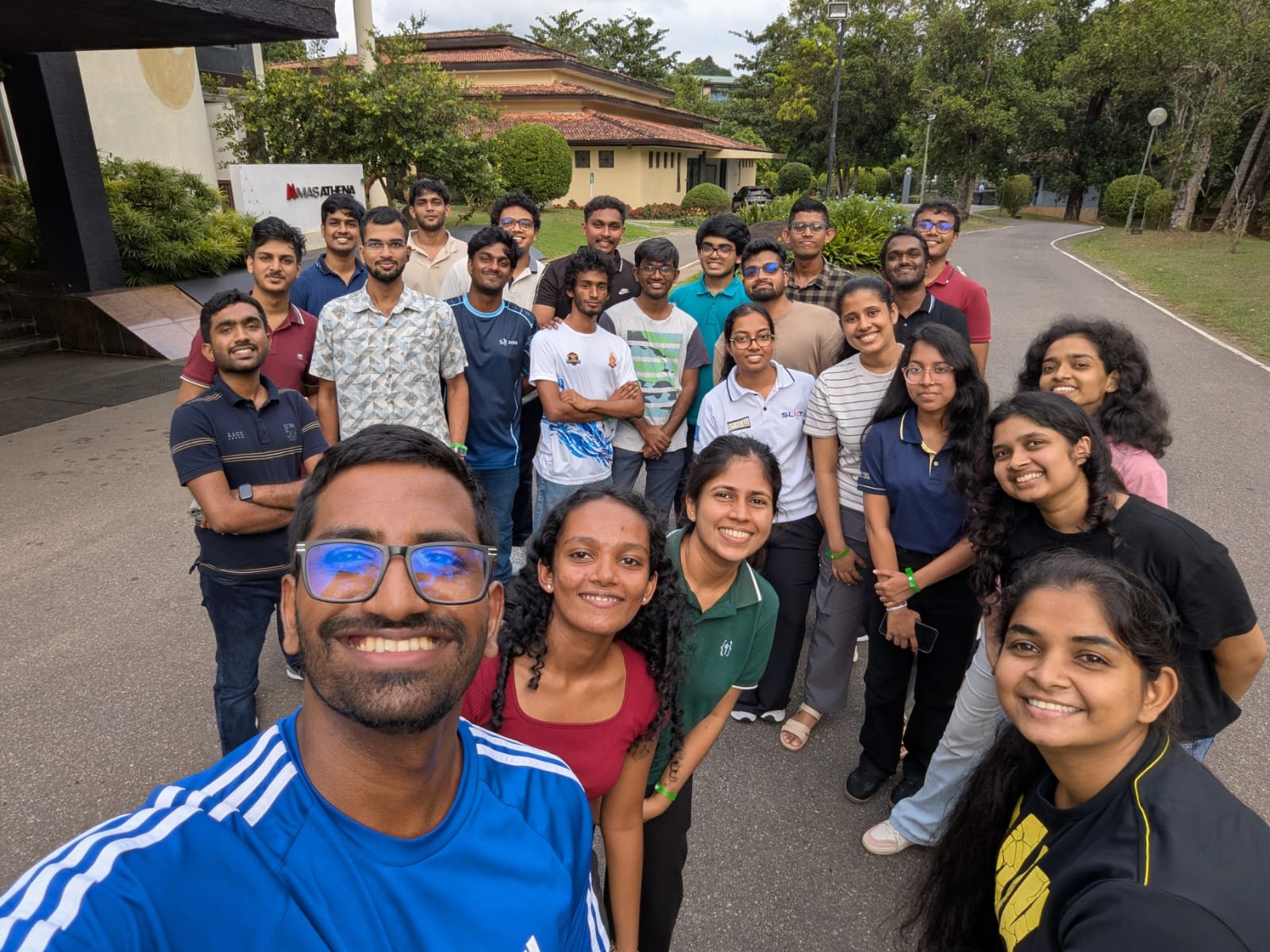
Day 1: the marshmallow that humbled us
The day opened with an ice breaker I hadn't seen before. Everyone does a gesture and says their name. Then the whole room repeats every name and gesture so far. By the end, the whole room was pushing through push-ups, squats and poses. Mine was a full 360 spin, which the last few people definitely did not thank me for. 😅
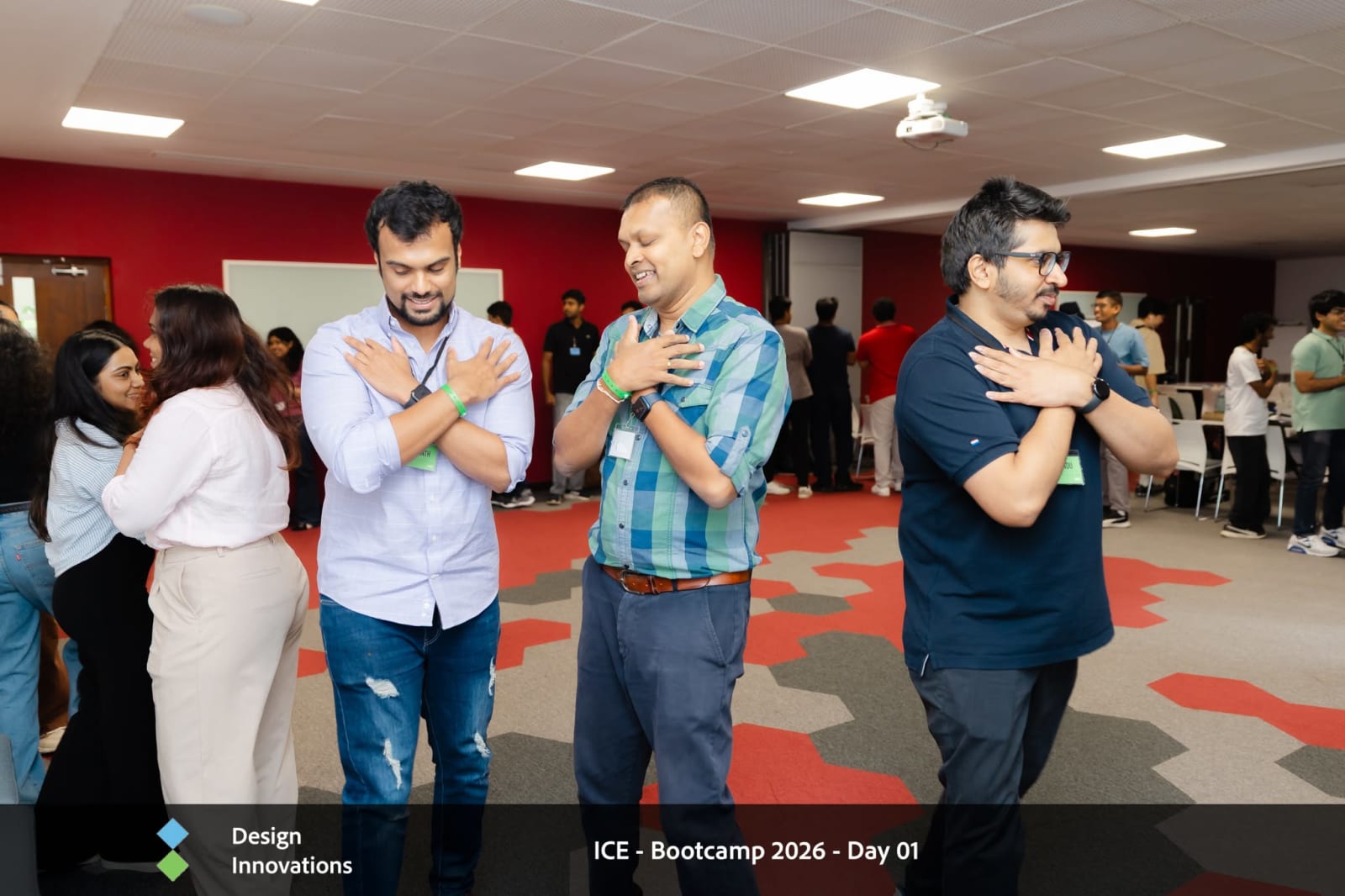
Then Prof. Suranga took over: what ICE is, why it exists, and what the next 40 hours would demand of us.
And then, the team challenge you already know the ending of. Build the tallest spaghetti tower that balances the marshmallow on top, in 18 minutes.
We split the work: half the team built a tripod base, the other half figured out how to seat the marshmallow. Glue the two together, done in 9 minutes, first in the room. Here's the catch though. You could submit your tower at any point and lock in the height, but if you tore it down to build taller, your locked score went to zero. We had a working tower and half the time left, so we submitted, sat back, and used the spare minutes to properly introduce ourselves. Life was good. We were leading.
Then, with two minutes on the clock, another team finished, and theirs was taller.
We looked at each other. We went for it. And, well. Let's just say it didn't work out. The tower collapsed, and our score went to zero.
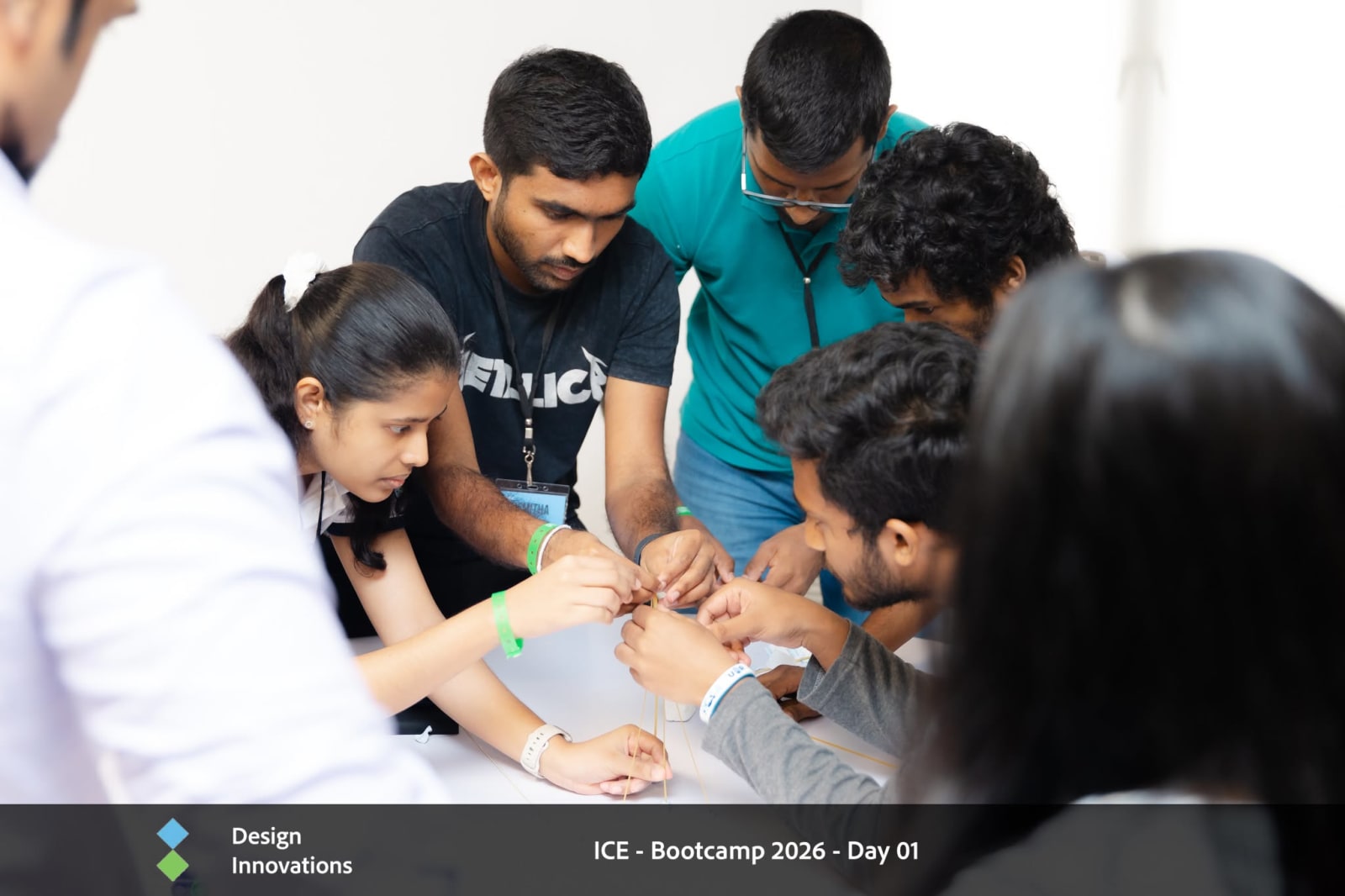
Two things stuck with me from that. First, assumptions are silent killers. Some teams built beautiful towers and placed the marshmallow last, assuming it was the easy part. The marshmallow is heavier than it looks; whole towers folded in the final seconds. Know what you're assuming before it knows you. Second, you won't always have a fallback. Sometimes you scrap a safe thing to chase a better one, you trust your gut, and it doesn't work out. That has to be okay. Zero on the scoreboard, but I'd make the same call again.
300 problems on a wall
After tea (where I finally got to properly know my team: Vidura, Demitha, Tharumini and Asiri), came my favourite exercise of the whole bootcamp: the HMW wall.
HMW stands for "How might we...". Fifteen minutes, everyone writes as many problems as they can, one per post-it, each starting with those three words. By the end, the wall had over 300 of them. Every annoyance, every "someone should fix this", every half-thought, all up there in ink.
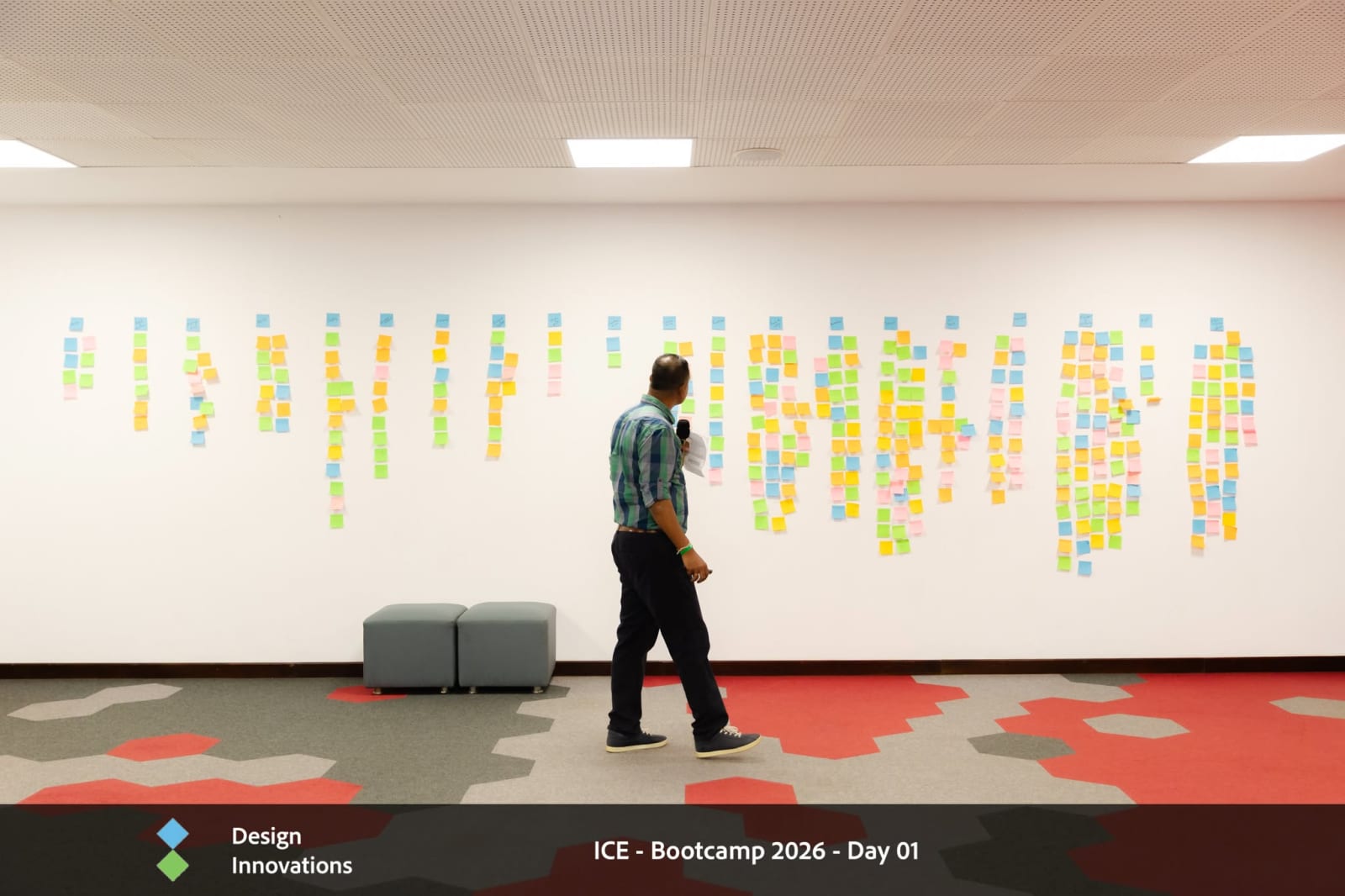
We picked a few and started pulling threads. Watch how ours mutated:
How might we help students stay awake at university? became how might we build a study assistant for university students? Then we asked who needs it most, and medical students have the most practical, hands-on setup of anyone, so: a study assistant for medical students. Then, why stop at students? How might we help medical practitioners themselves? And that's when someone raised something interesting: when doctors take a patient's history, the story shifts. Patients come back and, without meaning to, change details. So we landed on: how might we assist medical practitioners to make meaningful decisions based on factual data, amidst the variation in provided information?
Then we broke for lunch. And instead of just eating, we pulled out our phones and called every doctor we knew.
This is the part I want to underline. We're in 2026. We could have asked an AI to list the pain points of medical practitioners and gotten a tidy, plausible answer in four seconds. But ten minutes on the phone with actual doctors taught us things no model would have surfaced, because the doctors themselves only mentioned them when we dug. That's how we learnt where the pressure really sits, and why we came back from lunch and sharpened the problem to ER practitioners: the doctors with no time to double-check anything, where a quick, factual answer matters most. Ideation, and talking to people, is the one part of building I don't think we should ever outsource. AI can help you build the thing. It can't tell you which thing is worth building. People can.
Talks, glasses, and drawing in silence
The afternoon brought Sahan with a session called The Entrepreneur in You, walking through how he started freelancing early in his career, back when freelancing wasn't the obvious path it is today, and how the people he met shaped where he went.
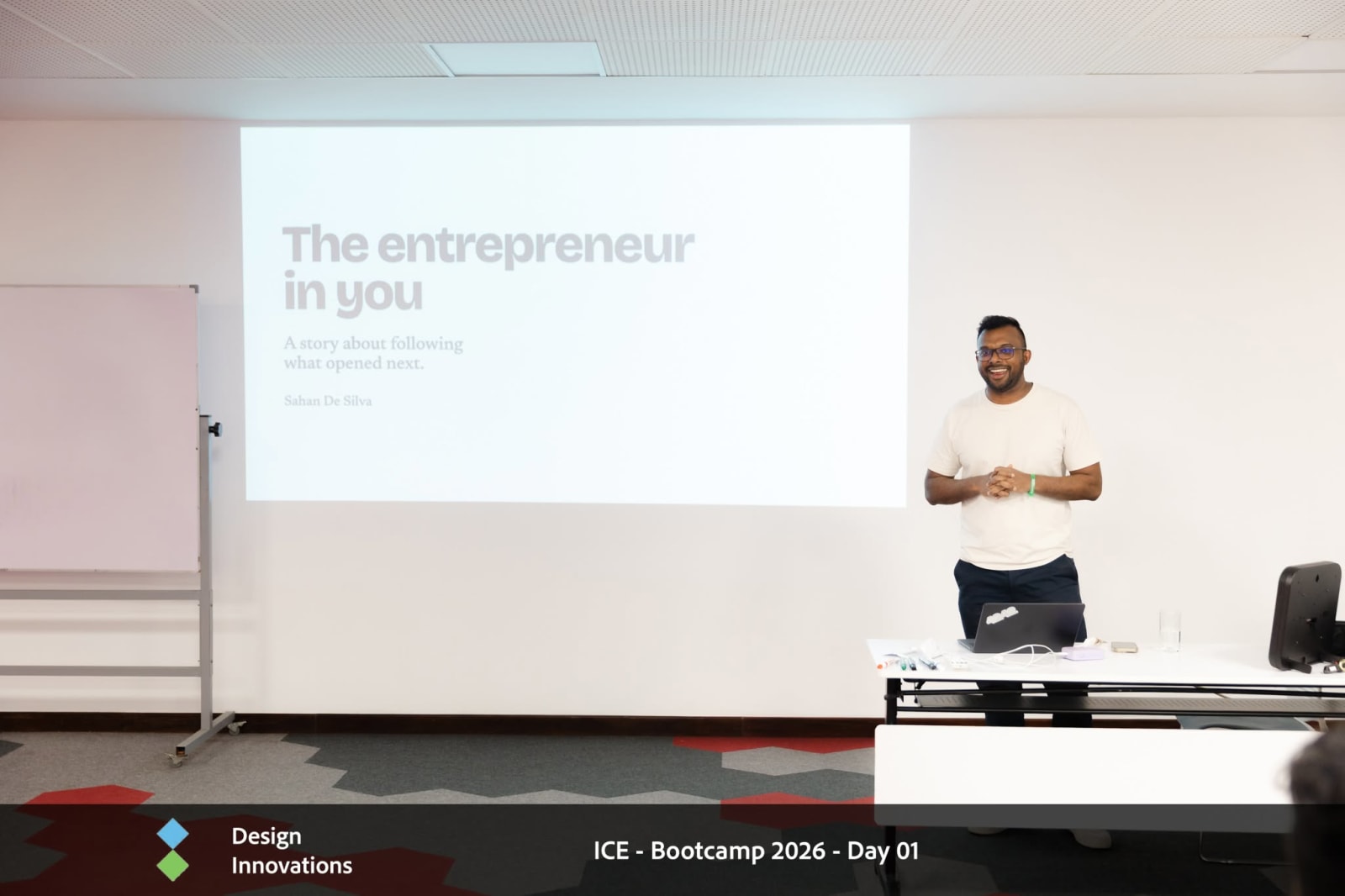
Then came the AI sneak peeks, three speakers on wearables. Prasanth showed what he'd built on the Meta Ray-Ban glasses and how to start building for them. Dinithi introduced Meta Aria Gen 2, Meta's research glasses carrying a whole array of sensors. And Tharindu talked about building an AI startup, including the parts that went wrong, which honestly taught more than the parts that went right.
Then, a technique I'd never tried: C-Sketch. Everyone silently draws their idea of a solution. Every two minutes, you pass your drawing to your neighbour, who builds on it, in silence, until your sheet comes back around. No pitching, no persuading. The point is that the loudest voice in the room doesn't get to steer everyone's thinking, and your own thoughts stay unbiased. Ideas compete on paper, not on volume. I loved it.
Out of that came two concepts. One for general practitioners, who have time: a summariser that digests reports and hands the doctor the essentials. One for the ER: a real-time aggregator that pulls the incoming reports and whatever the people accompanying the patient say, and feeds it straight to a smart glass on the doctor's face.
We pitched both, took feedback from the other teams, and were told to lock our problem by end of day. And that's when we made the call that shaped everything after: we stepped away from the ER entirely. An emergency room is a high-risk domain; get it wrong and people get hurt. So we pivoted to something more sustainable and just as real: how might we improve the training process of Sri Lankan medical undergraduates?
Another takeaway: sometimes pivoting is not changing and moving on. Sometimes it's stepping back to your initial idea. This is why defining the problem is so important. You can pivot, but if you don't know what you're pivoting from, you won't know what you're pivoting to.
Day 2: prototype mode
Day 2 came with a warning attached: it's going to be a long one. So my roommates and I (room 2202) went for an early morning swim to front-load some energy.
The morning ice breaker was another good one. The professor had a structure built out of coloured blocks, hidden away. One team member at a time could go look at it, come back, and describe it. The team had to recreate it exactly: colours, positions, everything. It's a memory game on the surface, but really it's a communication game.
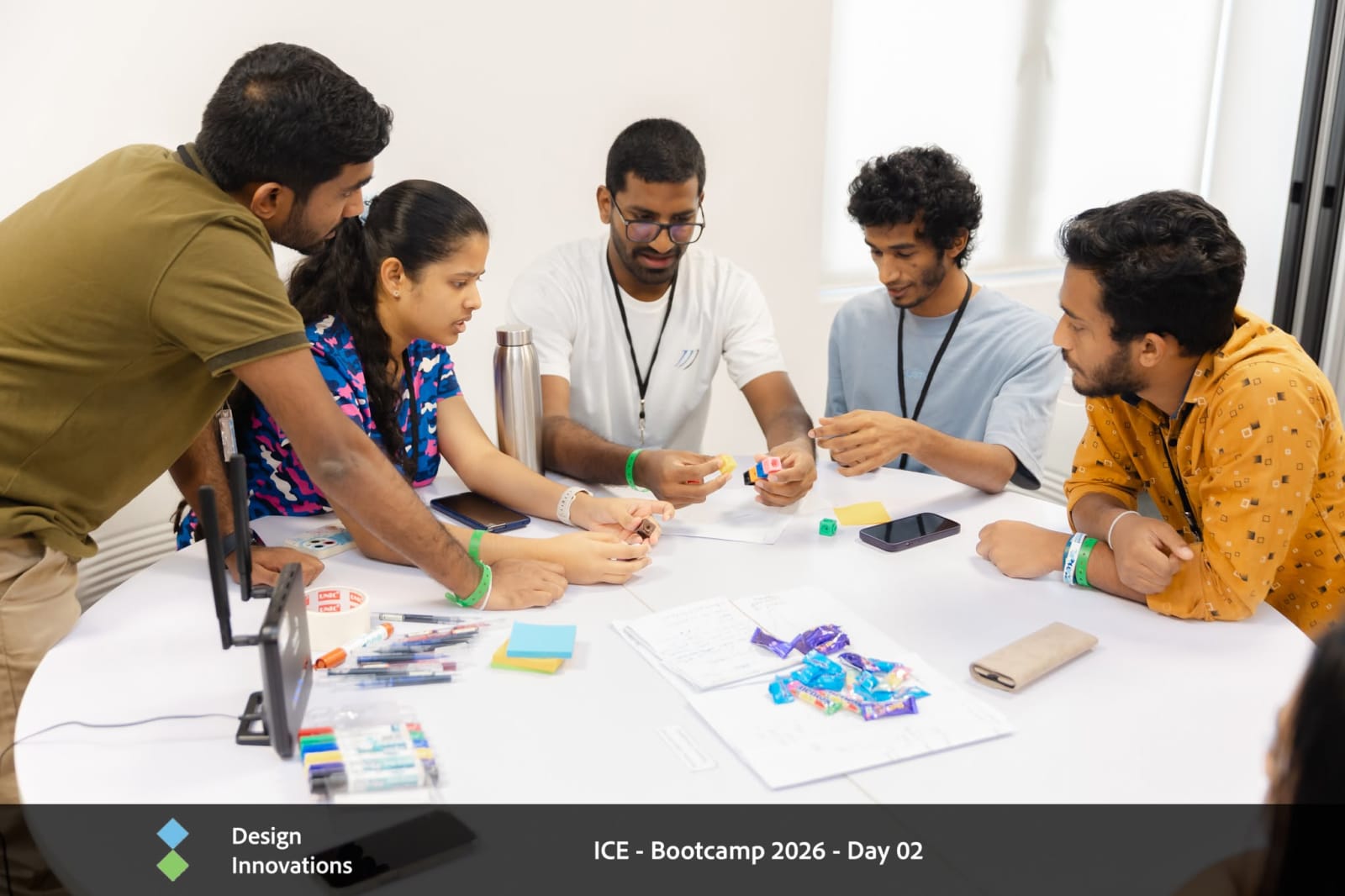
Then the real work: what do prototypes prototype? What do you actually need to prove, and what's the cheapest way to prove it? We also got hands-on time with the AIsee glasses. By the time tea ended, we'd split the work four ways: the prototype itself, the pitch, the website, and the demo booth.
After lunch, a talk on starting a venture, and one idea from it lodged itself in my head. The speaker warned us about people who validate everything you say. They'll nod along, say yes, yes, brilliant. Then you launch, ask why they aren't using it, and hear "ah, we already use something else, it's good enough." His advice: seek out the people who challenge you, because challenging you requires them to actually think about your idea. Agreeing requires nothing.
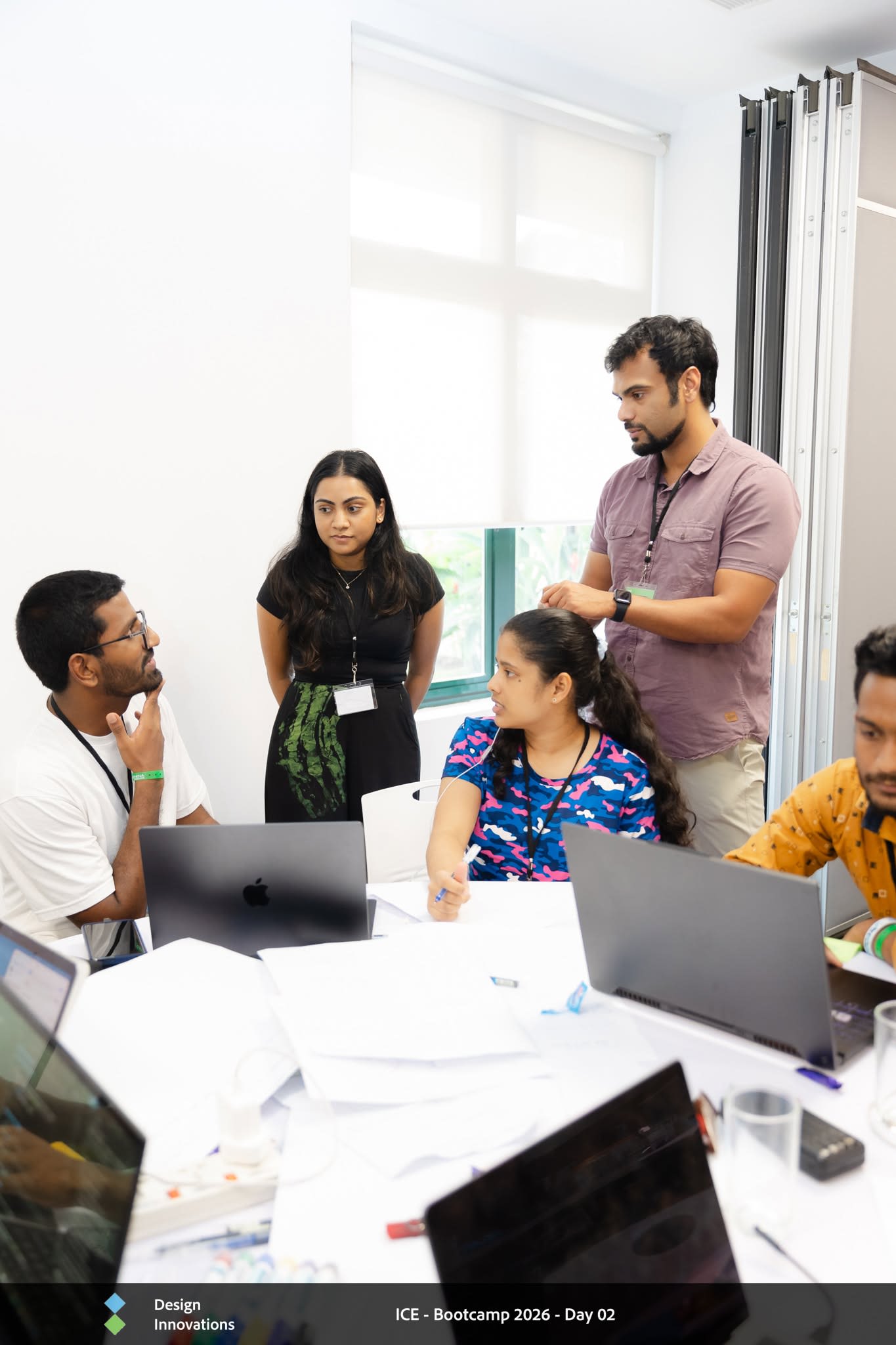
The rest of the afternoon was building. The prototype was coming to life on the Meta Ray-Ban glasses, the very ones Prasanth had shown us how to build for the day before. The villain of the day, though, was the Wi-Fi. We had to go old school, copy the codebase onto a USB drive and pass it around. Meanwhile, the other half of the product was taking shape on paper, through two canvases. The Value Proposition Canvas forces you to map what your user is actually trying to do, where it hurts, and what they wish they had, then checks whether your product honestly answers any of it. The Lean Canvas asks the harder business questions on a single page: who pays, who adopts first, what it costs, why you. Between the two, our problem and pain points got sharper than any brainstorm had made them. (The filled-in versions are up on our website, so I'll let them speak for themselves.)
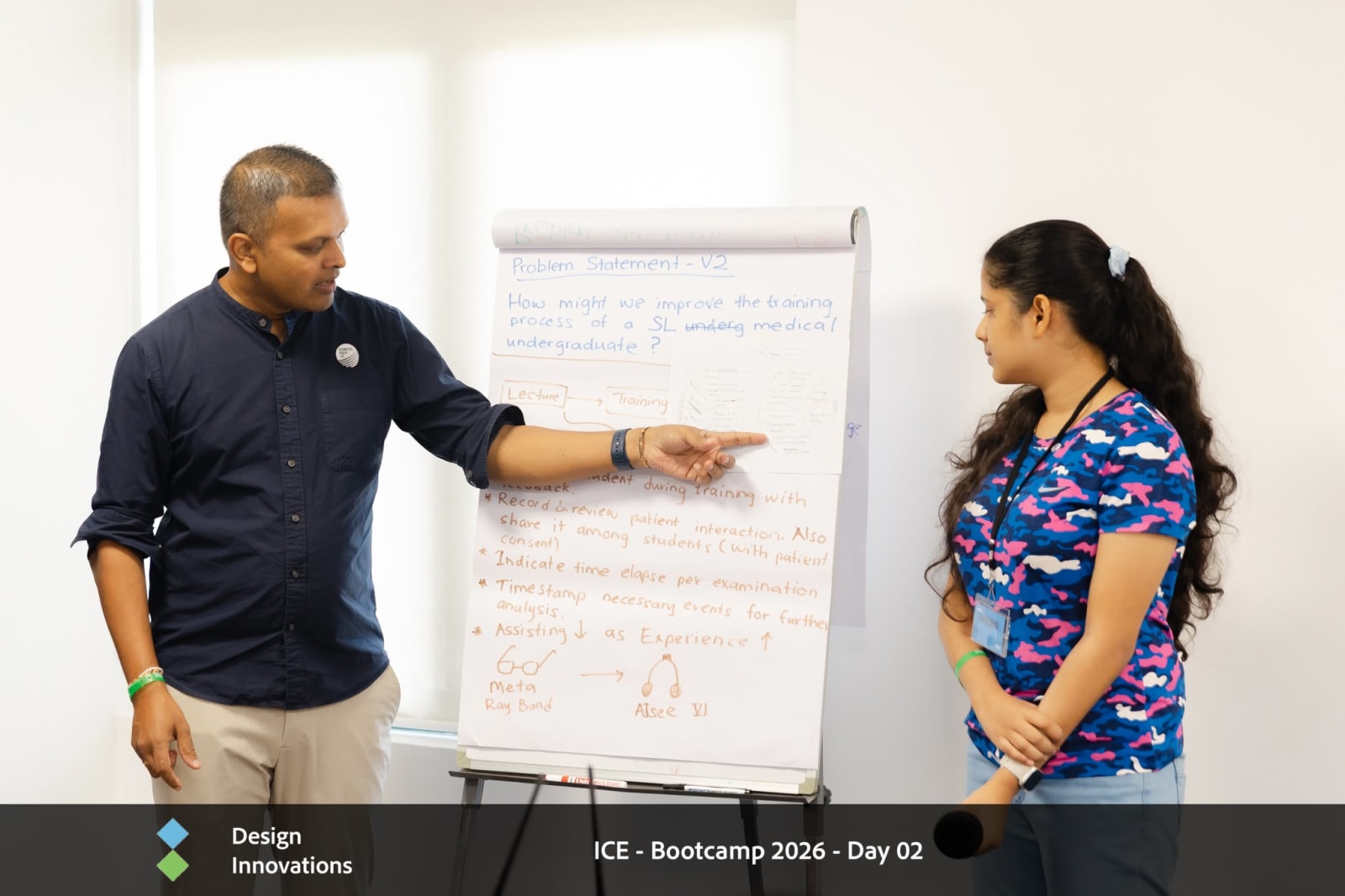
At 6 PM sharp, everything stopped. Prof. Suranga told us that on Day 1 he'd let teams work through the evening, and that he considered it a mistake. So on Day 2, tools down, everyone breaks. I spent that break in a long conversation with a fellow participant who wanted to talk through some crossroads they were at. I shared what had worked for me, with the honest caveat that what works for one person often doesn't transfer. Helping like that, just sharing experience and hoping some of it resonates, is one of those things that quietly gives me purpose.
Also, our team's unofficial motto was work-life balance, which our mentors Prasanth and Yadeesha constantly pushed. We took a walk. We went for a small run before dinner. I stand by all of it; the work got better, not worse.
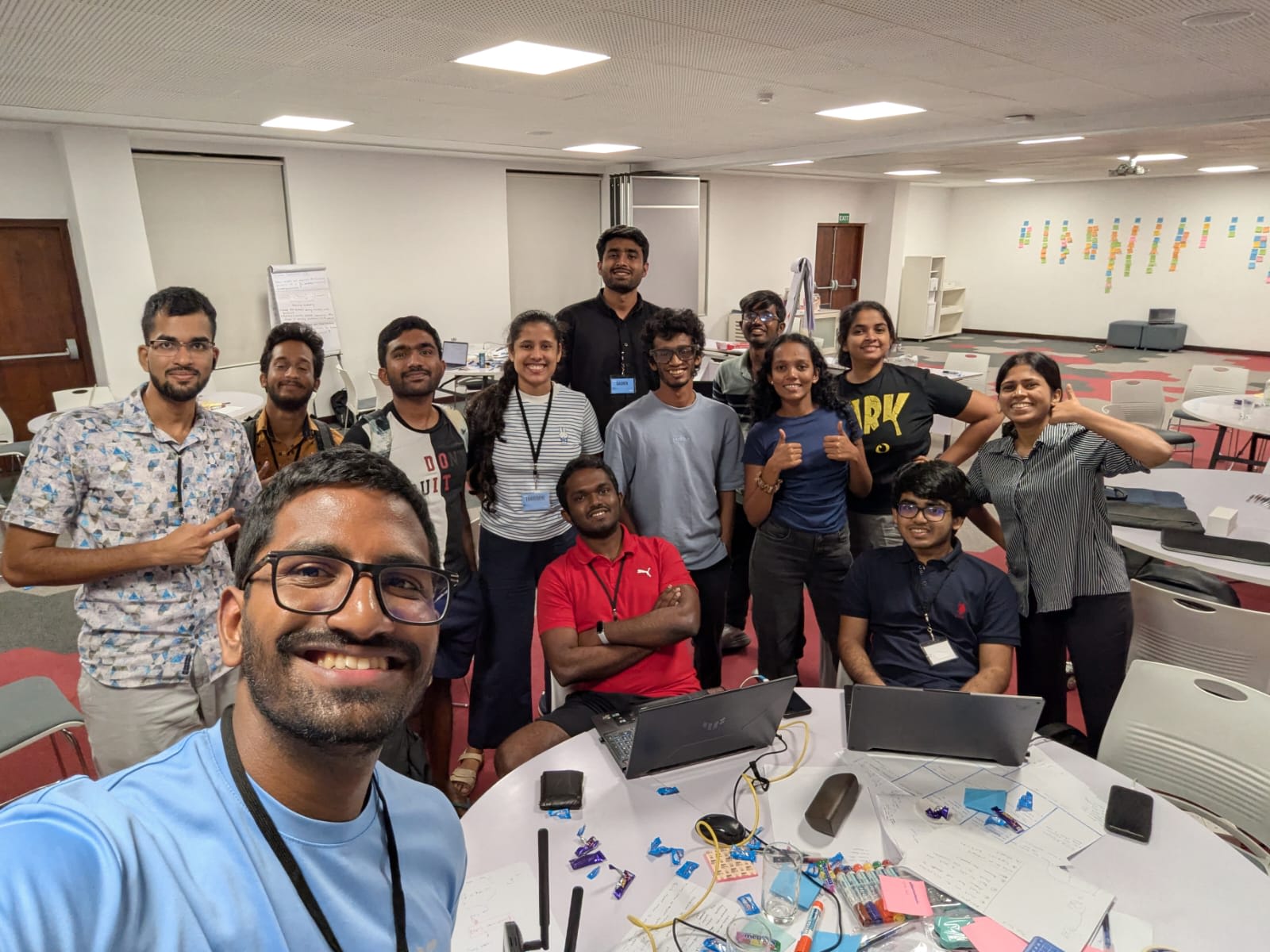
The night was the grind: the pitch, the slides, the prototype, the video, the website and so much in between. We did a trial pitch with just the opening paragraph, and the response was warm: "there's potential here, go for it." The mentors left around eleven. We stayed a while longer, fixed what needed fixing, and slept.
Day 3: the finale
No swim. We were running on fumes and went straight to breakfast.
The day opened with Sankha on redefining success, built around the image of an eagle in a cage watching other eagles fly free. He spoke about how often we define success by the standards society sets: O/L, A/L, university, PhD, job, and so on. He shared his own experience of how he erased the whole x-axis of his life and started defining success by his own standards. It was a good reminder that the only person whose opinion of your life matters is you.
Then came the final pitch prep. We had to pitch to a panel of judges, and we had three minutes to do it. Three minutes to explain a problem, why it matters, and how our solution solves it. Three minutes to convince people who don't know us that our idea is worth their time. Three minutes to make them care.
We did one more practice pitch, this time in front of the invited speakers, because we still hadn't validated our idea with a proper third party. The feedback was good, and Prof. Suranga said something that became our target: if you can deliver this same pitch at the finale, that would be ideal. Two gems came out of that session. Prof. Suranga's: privacy would eat too much of our three minutes to explain properly, so keep a backup slide ready and let the Q&A bring it to you. And Sankha's: watch out for the clock. We took both. One of them, as you'll see, paid for itself.
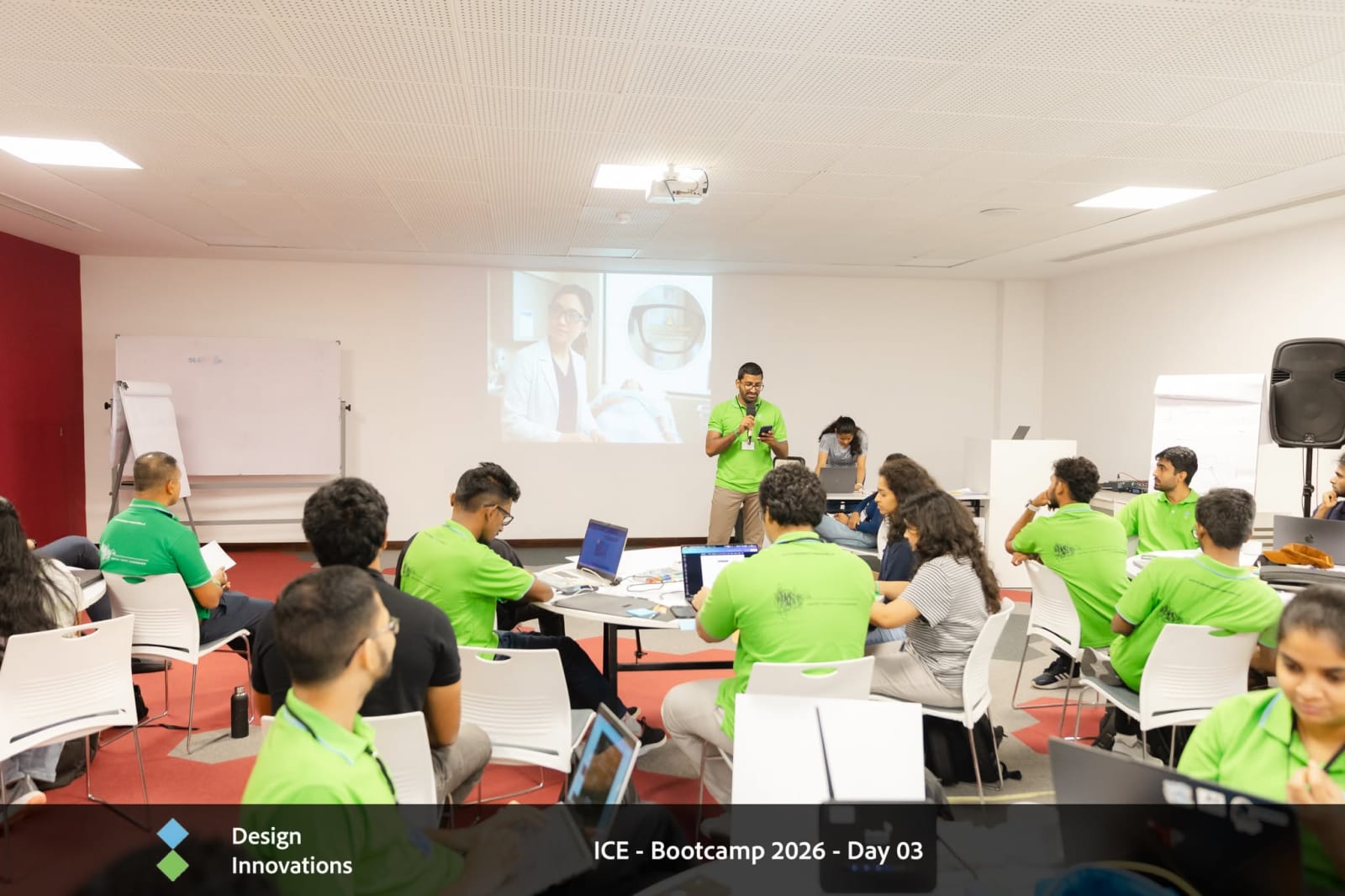
The final hours were a blur: finishing the website (medflix.designthinking.lk), polishing slides, setting up the demo booth. I was so sleepy I could barely hold the script in my head. My teammates, practicing with me, had that polite look that says something is off but we're not going to panic you. I had a good feeling anyway.
MedFlix
Here's what we'd built, in the words of the pitch itself.
Ever wondered how athletes get so good? It's not just practice. After every game they sit down and watch the footage, every missed shot, frame by frame. Athletes have replays. Pilots have recorders. Engineers have logs. Doctors... what do doctors have?
In Sri Lanka, over 2,000 medical students enrol every year, into roughly 20 teaching hospitals. That's about 100 students per hospital per batch, four batches training at once. Their teachers are senior doctors whose first duty is, rightly, their patients. So each student gets a few rushed minutes of feedback, if they're lucky, and after seeing patient after patient, they barely remember their interactions, let alone their mistakes.
MedFlix puts a smart glass on the student. It records their patient interactions (with explicit consent, more on that in a moment) so they can review them later, and share them, so one student's patient becomes two hundred students' lesson. That's phase one. Phase two adds feedback: a gentle audio nudge mid-examination when a step is missed, a visual cue in the lens if they're still unsure, and an end-of-day review showing exactly where things went wrong. A guide beside you during the examination, a mentor reviewing your footage after.
Review today. Save lives tomorrow.
The rest of MedFlix, the journey, the canvases, the full story, lives at medflix.designthinking.lk. Go have a look.
The pitch, the panel, and the slide that saved us
The big stage. The pitch was flowing, and we'd saved a little theatre for the reveal: the Netflix ta-dum, then the MedFlix logo. Except right at that moment, the clicker decided not to click. A pause, another press, and it came back to life; the logo landed, just without quite the drama we'd rehearsed. My theory? We had led the tower challenge for a few glorious minutes, and the curse doesn't forget 😅 It couldn't take our pitch, so it took our clicker. We pushed through, though time ran out with one paragraph left unsaid. Lessons filed away for next time.
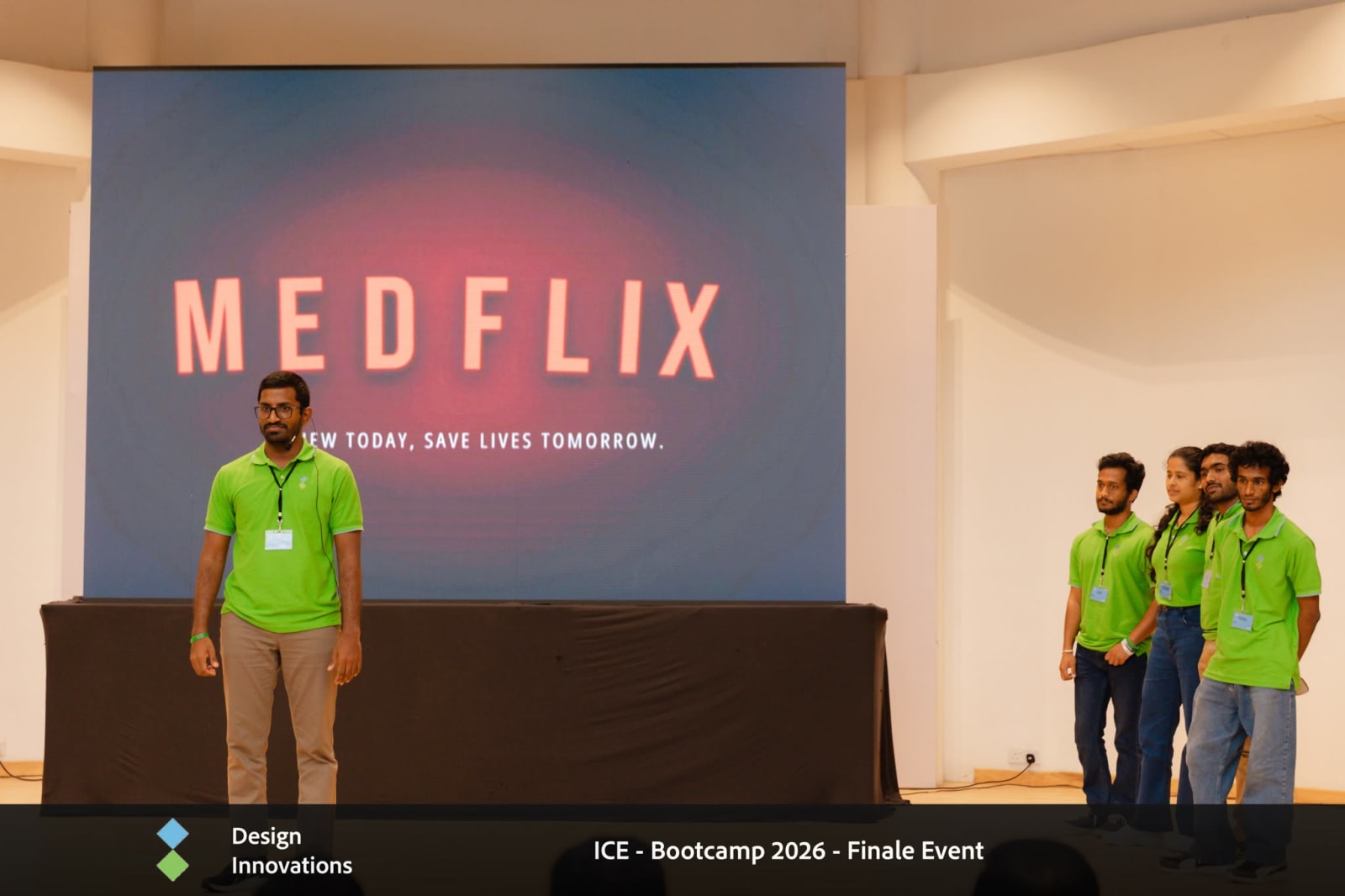
Then came the questions, and this is where the story gets good. The panel of judges included our guest of honour, Pradeep Saputhanthri, Secretary to the Prime Minister of Sri Lanka, and Jayantha Fernando, one of the biggest names in IT and cyber law in the country. It was the latter who asked about privacy.
Remember the backup slide? We pulled it up: our whole consent-first design, built around Sri Lanka's Personal Data Protection Act. What we didn't fully appreciate until that moment was who we were showing it to. Jayantha Fernando chaired the drafting of the PDPA. Watching him light up at students who'd actually read the thing he wrote... that was a boost I can't describe.
At the awards, every team was recognised, and then came the big ones. Best Pitch: MedFlix. After the clicker, after the unfinished paragraph, after me barely trusting my own sleepy memory of the script.
And there it was. The tower curse, holding firm for one more edition: zero on the marshmallow challenge, best pitch at the finale. If you're at ICE 2027 and your tower is winning, I don't know what to tell you. Maybe knock it over. 😉
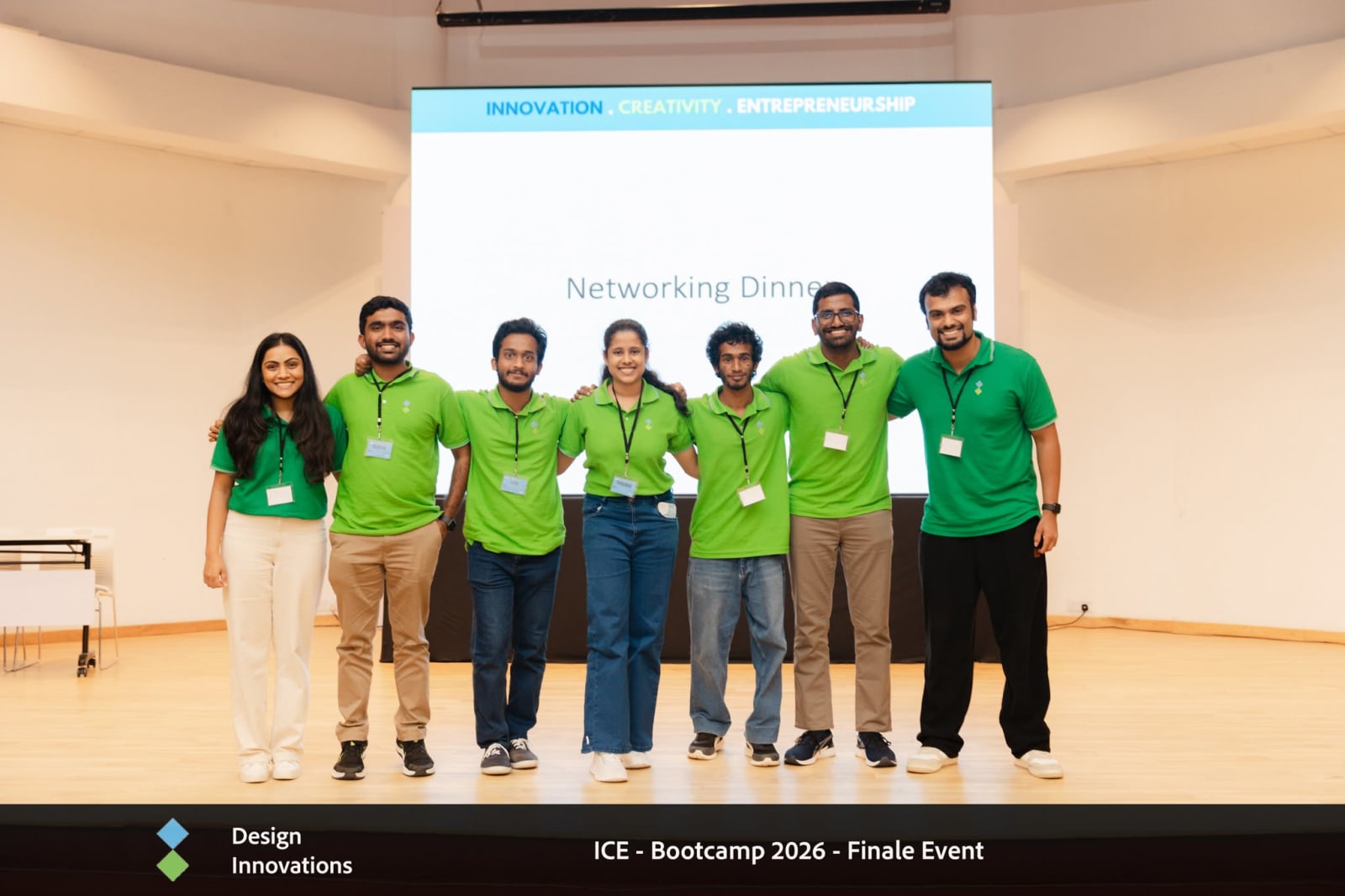
We spent the evening demoing MedFlix to a stream of curious people at the booth. And at dinner, I received a piece of feedback I'll keep longer than the award: that whenever feedback came my way, I took it in with humility. I try hard to be that person, to stay down to earth and let feedback actually change me for the better, and hearing it noticed, by someone whose opinion I deeply respect, validated something I hold close.
Then we danced. The mentors left, and the participants stayed up talking about what these days had meant, played some games, and drifted off to sleep. In the morning, breakfast, vans, Moratuwa.
The three things I'm taking home
On time. In school we lived by a line: if you're early, you're on time; if you're on time, you're late. I've valued time ever since, because time is life, quite literally the only non-refundable thing you spend. ICE ran on time. Session after session, day after day, across three packed days. Anyone who has organised anything knows how absurdly hard that is, and being in a room where everyone treats your time as precious makes you want to match it.
On people. AI compressed our build time for sure. But every important decision we made, the pivot away from the ER, the focus on training, the consent-first design, came from talking to humans: doctors on lunch-break phone calls, medical students, mentors, the teams giving us feedback. Keep the machines for the building. Keep the people for the understanding.
On community. Here's the thing that reframed it all for me. Most of the mentors running ICE this year were once participants themselves, sitting where we sat at a previous edition. Now they were on the other side, giving up their days for thirty strangers' ideas, and nobody pays them for it. We all join communities thinking about what we'll gain. But a community only exists because the people who came to gain stayed to give. If everyone only took, there'd be nothing to take from. Somewhere down the line, I expect a few of this year's thirty will be standing at the front of ICE 2027. That's the whole trick. That's how the lights stay on.
A special mention to two people who kept things running quietly in the background: Asitha, who coordinated with us and the main organizer of the event, and Sankha, who built the ICE website and got every team's site deployed.
To Prof. Suranga, the Augmented Human Lab, the SHA Foundation, our mentors Prasanth and Yadeesha, all the mentors and speakers, and my teammates: thank you for an amazing three days.

#ICE2026
#DesignThinking
#MedFlix
#Wearables
#Bootcamp